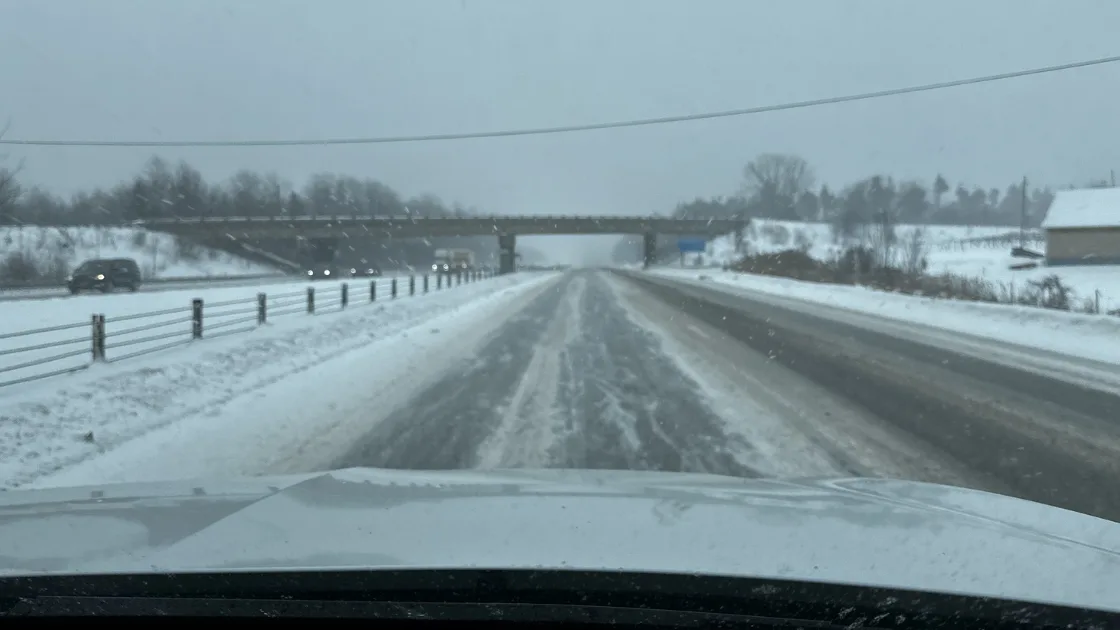
If you’ve lived in Northeast Ohio for more than one winter, you already know what the roads look like by January. White-crusted asphalt, slush piles along the curb, and the faint chemical smell that means ODOT has been out again. Road salt keeps drivers safe. That part is true. But what it does to the underside of your vehicle is a different story entirely. If you’ve ever watched rust creep across a rocker panel or seen a truck frame go soft, you’ve seen road salt at work. Here’s what’s actually happening under your vehicle, and what you can do to stop it.
Why Road Salt Is So Destructive
Salt doesn’t rust your vehicle directly. What it does is speed up the electrochemical reaction that creates rust. Steel and iron need oxygen and water to oxidize, which is the process we call rusting. Salt acts as an accelerant in that reaction. It pulls moisture in and holds it against metal surfaces long after the roads have dried.
In a place like Akron, Wadsworth, or Medina, your vehicle can be exposed to road salt from November through March. That’s five months of repeated exposure. Salt gets packed into wheel wells, sprayed into seams and joints, and deposited into every gap it can find. Once moisture is trapped in those tight spaces, oxygen does the rest. Rust starts from the inside out, which is why you often don’t see it until it’s already done serious damage.
By the time rust is visible on your door sills or floor panels, it’s been working quietly underneath for months or years.
The Parts of Your Vehicle Most at Risk
Not all parts of your vehicle are equally vulnerable. The areas that get the most salt exposure are almost always underneath, where you never look. Here are the spots that take the hardest hit:
- Frame rails and cross members, which are structural and expensive to repair
- Rocker panels along the lower edge of the doors
- Wheel wells, where salt packs in and stays wet
- Floor pans and undercarriage seams
- Fuel and brake lines
- Suspension components and spring perches
Rust on a door is cosmetic. Rust on a frame rail or a brake line is a safety issue. Protecting these areas isn’t just about keeping your vehicle looking good. It’s about keeping it functional and safe for as long as you own it.
Why Washing Your Vehicle Isn’t Enough
Washing your vehicle after a salt event is genuinely helpful. It removes surface salt and slows the process down. But it doesn’t address what’s already worked its way into the seams, joints, and cavities where water sits, and air doesn’t flow. Those are exactly the places where rust takes hold.
Think of it this way: washing gets the surface, but the threat is underneath. A thorough undercarriage rinse helps more than a standard wash, but even that doesn’t get into every place that needs protection. Salt in a tight seam doesn’t rinse out easily. It stays, absorbs moisture from the air, and keeps doing its job even after your vehicle looks clean from the outside.
To actually stop rust before it starts, you need a barrier between the metal and the moisture. That’s what rust protection does.
How Krown Rust Protection Works
Krown’s formula is designed to creep into the tight seams and cavities that washing can’t reach. It displaces moisture and leaves behind a protective coating on the metal surfaces underneath your vehicle. The product works its way into the places where salt-driven rust actually starts.
One of the things that makes Krown worth knowing about is its dielectric properties. The formula has a dielectric value of 40,000 volts, which means it’s safe around wiring harnesses and electrical components. That matters for modern vehicles with complex electrical systems, and it matters even more for hybrid and electric vehicles. You don’t have to worry about Krown interacting with the electronics that keep your vehicle running.
Krown recommends one application per year to maintain protection. The process takes about 45 minutes to an hour from start to finish. You drive in, the Krown team handles everything, and you spray and drive. That’s the whole thing. One trip a year to protect your investment and give Ohio’s salt season something to work against.
When Is the Right Time to Get Krown?
The most popular time is fall, right before the salt season starts. And that makes sense. Getting protected before the first heavy application goes down is ideal. But here’s the thing: summer is also a smart time to book.
If your vehicle went through a full Ohio winter without protection, the salt residue is still in there. Summer is the right time to address that. You can get Krown applied now to displace any remaining moisture and salt, and you’ll carry that protection right into the next winter season. It’s not too late. It’s actually good timing.
Drivers in Akron, Cuyahoga Falls, Copley, Canton, Tallmadge, Stow, and across Summit and Medina County are already making this part of their annual routine. One spray a year is a small commitment compared to what rust repair costs, or what early trade-in loss feels like.
Stop Rust Before It Starts in Akron
Ohio road salt is relentless. Your vehicle doesn’t have to be at its mercy. Krown Akron serves drivers in Akron, Copley, Cuyahoga Falls, Wadsworth, Medina, Canton, and all across the region. Protect your investment with one appointment a year. Call us at (330) 785-7895 to schedule your appointment today.
RELATED SERVICE
Car Rustproofing in Akron, OH